WaitForSingleObject
TLDR: WaitForSingleObject ensures the main program waits until the shellcode thread finishes executing.
Executive Summary
WaitForSingleObject is the enabler of precision in process injection. This Windows API function, often overshadowed by flashier calls like CreateThread or VirtualAlloc, provides attackers with the ability to synchronize and control the execution of malicious code. Whether waiting for a thread to complete, a process to terminate, or a handle to signal, it ensures payloads execute at the right moment, avoiding crashes or premature detection. From coordinating shellcode execution to chaining with stealthy injection techniques, WaitForSingleObject is a staple in malware, APT toolkits, and red team operations. As defenders zero in on more obvious APIs, attackers adapt, patching this call or swapping it for lower-level alternatives like NtWaitForSingleObject. This entry dives into how WaitForSingleObject operates and how adversaries leverage its quiet reliability to stay under the radar.
What is WaitForSingleObject?
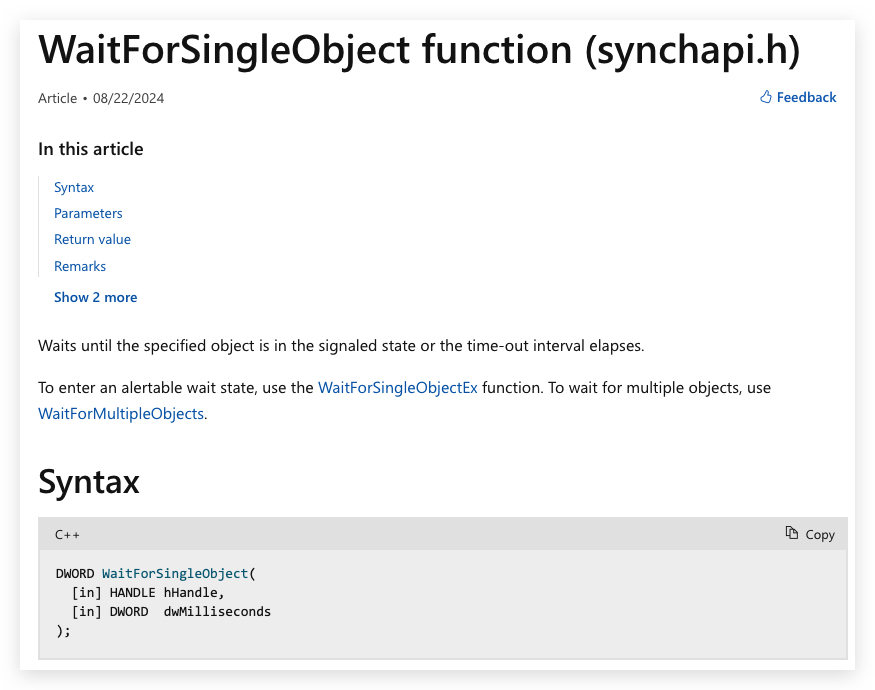
WaitForSingleObject is a synchronization API from kernel32.dll that allows a process to wait for a single object—such as a thread, process, or mutex—to reach a signaled state or until a timeout elapses. In legitimate applications, it’s used for thread synchronization, resource coordination, or waiting for process completion. In malicious contexts, it’s a critical component for ensuring injected code executes correctly, often paired with APIs like CreateThread and WriteProcessMemory. By waiting for a thread or process to signal, attackers can orchestrate complex injection chains, ensuring stability and timing precision in their payloads.
Why It Matters
WaitForSingleObject is included in the Windows API Abuse Atlas due to its pivotal role in process injection and execution control. It’s not just about waiting—it’s about precision. Attackers use it to ensure a newly created thread (via CreateThread) completes its malicious task, like executing shellcode or loading a DLL, before proceeding. It’s also key in stealthier techniques, such as waiting for a suspended thread to be hijacked or ensuring a target process is ready before injecting code. Its versatility and low profile make it a favorite for both commodity malware and advanced threat actors, enabling reliable, synchronized execution without drawing attention.
How Attackers Abuse It
Attackers leverage WaitForSingleObject to synchronize and stabilize their injection workflows. After allocating memory with VirtualAlloc and writing a payload with WriteProcessMemory, they might use CreateThread to launch the payload and then call WaitForSingleObject to ensure the thread completes before cleaning up or proceeding to the next stage. In stealthier scenarios, attackers use it to wait for a hijacked thread to execute their code or to confirm a process is in a vulnerable state before injection. By carefully timing their actions, they avoid crashes and reduce detection risks. Some advanced adversaries patch WaitForSingleObject or replace it with NtWaitForSingleObject to evade API monitoring, making it a subtle but critical tool in modern post-exploitation tradecraft.
Sample Behavior
Detecting malicious use of WaitForSingleObject requires focusing on context, not just the API call. Legitimate applications, like task managers or development tools, use it for routine synchronization, often in predictable patterns tied to signed binaries or well-known processes. Malicious use, however, shows up in suspicious scenarios: unsigned executables in temporary folders, unusual process chains, or WaitForSingleObject calls following memory allocation and thread creation in high-value processes like system services or browsers. A key red flag is when it’s used to wait on a newly created thread in a process with no legitimate need for such synchronization. Pairing with thread hijacking or unexpected handle manipulation should raise alarms. As always, context is everything.